


Why is my dog scratching so much?
Every dog scratches. The question is whether it stops.
Occasional scratching is background noise — a quick itch, done, moving on. When a dog keeps coming back to the same spot, wakes up to chew at their skin, rubs their face along the carpet, or shakes their head every few minutes, something is driving it. That something needs to be identified.
The cause can be as simple as a flea or as complex as a food allergy that has been building for years. Where the dog scratches, how often, what the skin looks like underneath, and whether other symptoms are present all point toward the answer.
How much scratching is normal?
A few scratches throughout the day is entirely unremarkable.
The line gets crossed when scratching becomes frequent enough to interrupt normal behavior — stopping mid-play to chew a paw, waking from sleep to attack a spot, rubbing against furniture with obvious relief-seeking urgency. That is not casual itchiness. Something is wrong.
Pay closer attention when the scratching is new, escalating, or accompanied by hair loss, scabs, redness, odor, ear shaking, or skin that looks inflamed.
Common causes of constant scratching
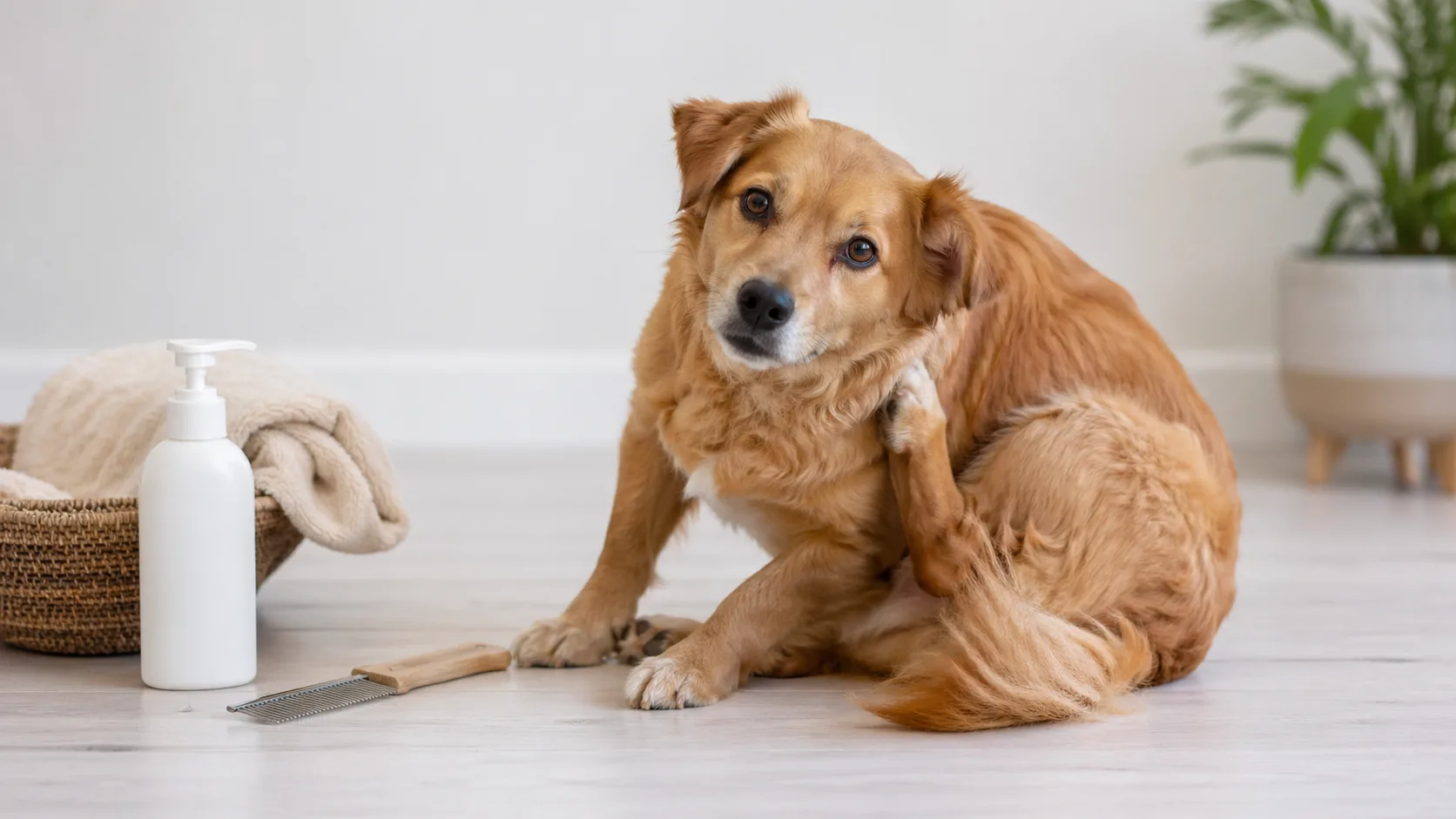
Most chronic dog scratching traces back to one of these:
- Fleas or flea allergy: One bite is enough for a sensitized dog. The reaction can be severe and prolonged long after the flea is gone.
- Environmental allergies: Pollen, grass, dust mites, and mold are common triggers — often seasonal at first, then year-round as sensitivity increases.
- Food sensitivities: Chronic itching, recurrent ear infections, and GI symptoms together can raise suspicion for a food sensitivity, though other causes are often more common.
- Dry skin: Low humidity, overbathing, or the wrong shampoo strips the skin barrier and triggers itch.
- Bacterial or yeast infections: These develop secondary to other problems and make everything worse — itchier, smellier, more inflamed.
- Mites or mange: Intensely itchy, often missed on casual inspection, and contagious in some forms.
- Contact irritation: Lawn chemicals, cleaning products, synthetic fabrics, or new grooming products can all be the culprit.
- Anxiety or compulsive licking: Real, but a diagnosis of exclusion. Rule out medical causes first.
My dog is scratching but has no fleas
No visible fleas does not close that door.
Flea allergy dermatitis is one of the most common skin conditions in dogs, and the flea responsible may never be found — particularly in dogs that groom heavily or have dense coats. A single bite triggers the immune response. The flea itself is long gone.
For dogs on consistent year-round prevention who are still scratching, fleas become less likely but allergies, infections, and mites move up the list. Consistent prevention matters here because it removes one variable cleanly.
What the pattern of scratching can tell you
Location is useful diagnostic information:
- Paw licking or chewing: Allergies, yeast overgrowth, or contact irritation from grass and chemicals — often all three at once.
- Ear scratching and head shaking: Ear infection, mites, or allergies affecting the ear canal.
- Belly, armpits, and groin: Classic environmental allergy distribution — thin-skinned areas with direct allergen exposure.
- Base of the tail: Fleas or flea allergy should be high on the list.
- One spot, repeatedly: Hot spot developing, or pain and irritation driving focused attention.
None of this is a diagnosis. It is a starting point.
Safe home care for mild itching
For a dog that is mildly itchy with no broken skin, a few practical steps are reasonable while arranging veterinary care:
- Check the coat and skin carefully for fleas, flea dirt, redness, scabs, or hair loss
- Confirm flea prevention is current and appropriate for the dog's weight
- Switch to a gentle, fragrance-free dog shampoo if bathing frequency or product may be a factor
- Rinse or wipe paws after walks during high-pollen periods
- Wash bedding in fragrance-free detergent
- Prevent access to raw or broken areas to avoid secondary infection
This is for mild irritation only. Broken skin, odor, swelling, bleeding, or worsening symptoms need veterinary attention — not more home management.
What not to apply to itchy skin
Human anti-itch creams, essential oils, tea tree oil, hydrogen peroxide, alcohol, and medicated products not formulated for dogs all belong off the list.
Dogs lick. Whatever goes on the skin goes into the mouth. Some of these products are irritating to skin even before ingestion becomes a concern. Tea tree oil in particular can be toxic to dogs, especially at concentrations found in many human products. When in doubt, call the vet before applying anything.
When to call a vet
Sooner rather than later if any of these are present:
- New or spreading hair loss
- Red, raw, swollen, or bleeding skin
- Scabs, sores, or hot spots
- Odor from the skin or ears
- Persistent ear scratching or head shaking
- Constant paw licking or chewing
- Visible pain or sensitivity when touched
- Lethargy, appetite changes, or behavioral shifts
- Scratching that has lasted more than a few days or keeps recurring
Itch-scratch cycles are self-perpetuating. Scratching damages the skin barrier, bacteria and yeast colonize the disrupted surface, the infection intensifies the itch, the dog scratches more. Getting ahead of it early is considerably easier than managing a secondary infection on top of whatever started it.
How vets approach the itchy dog
A good workup starts with history — where, when, how long, what has changed, what the diet is, what prevention is being used, whether it is seasonal.
From there, depending on what the skin looks like, the workup may include skin cytology for bacteria and yeast, skin scrapings for mites, ear examination, flea combing, allergy assessment, or a dietary elimination trial. Medication trials are sometimes diagnostic in themselves.
The goal is not to suppress the itch temporarily. It is to find what is causing it so the problem stops returning.
Preventing recurrence
Prevention is cause-dependent, but these habits help most dogs:
- Year-round flea prevention if recommended by the vet
- Consistent grooming with gentle, dog-appropriate products
- Paw rinses after walks in high-pollen or chemically treated areas
- Clean bedding, washed with fragrance-free detergent
- A stable, balanced diet without unnecessary ingredient changes
- Following the vet's management plan for dogs with confirmed allergies or recurrent infections
Chronic allergy dogs rarely get a single fix. They get a management strategy. The distinction matters for owner expectations.
What to do if the scratching is constant
Check the skin. Look for redness, hair loss, fleas, ear involvement, paw changes, odor, or sores.
If the scratching is frequent, the dog seems genuinely uncomfortable, or the skin looks anything other than normal — book the vet appointment. Constant itching is one of the most reliable signals that something in the skin, ears, or immune system needs attention. The longer it runs unaddressed, the more complicated it gets.