

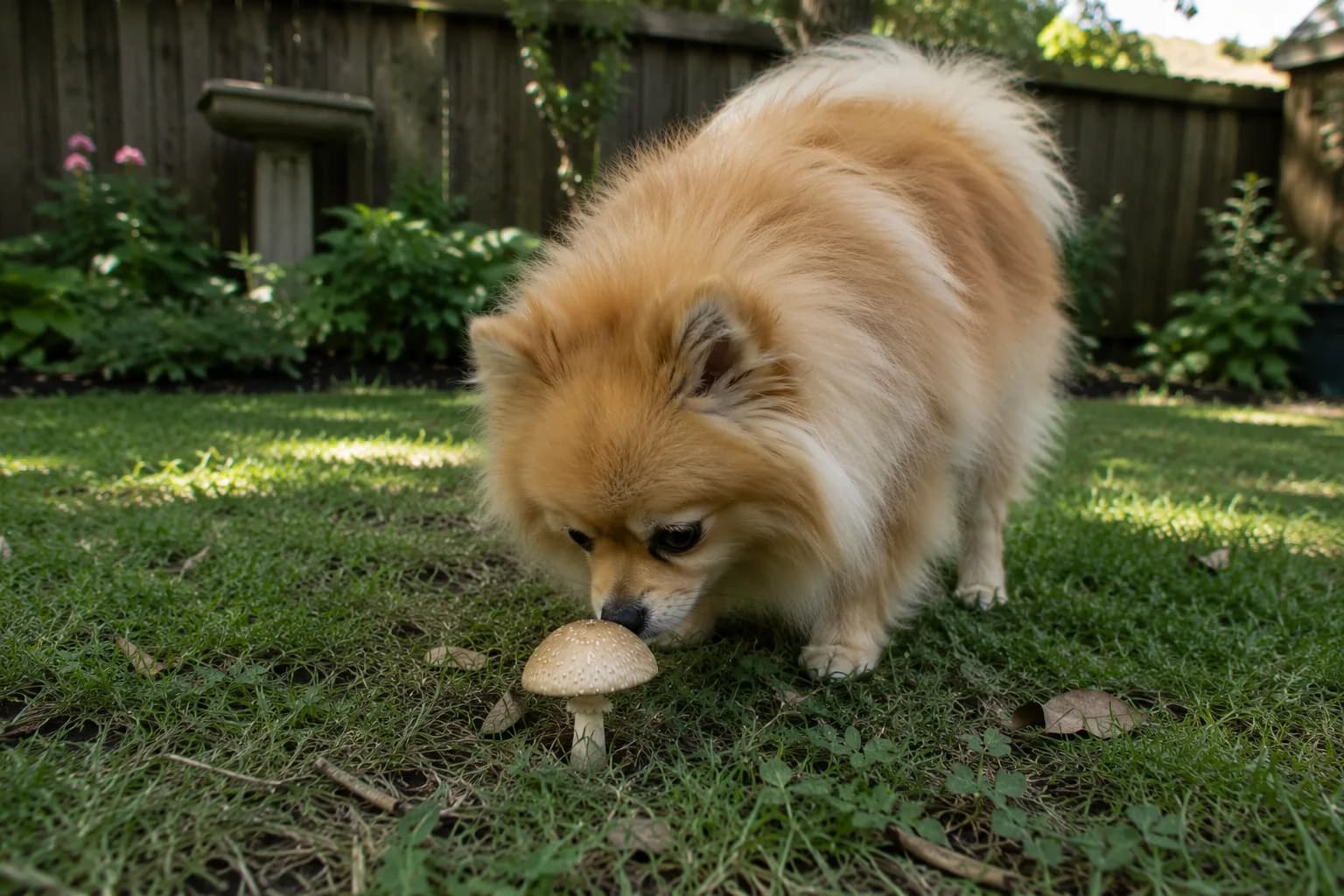
Can Dogs Eat Mushrooms?
It depends entirely on which mushroom and how it was prepared.
Common grocery store mushrooms — button, portobello, cremini, shiitake — are not inherently toxic to dogs when served plain and cooked. The problem is rarely the mushroom itself. It is the garlic butter, the cream sauce, the salt, the onion, the seasoning, or the fact that the mushroom came from the yard rather than the produce aisle.
Wild mushrooms are a completely separate conversation. Some of the most toxic mushrooms in existence look unremarkable — small, brown, cap-and-stem, exactly what a dog would snap up off the ground without a second thought. Visual identification by a non-expert is not reliable. If the mushroom did not come from a grocery store, treat it as potentially dangerous until proven otherwise.
Are Mushrooms Bad for Dogs?
Grocery mushrooms, plain and cooked, are not toxic to dogs. Wild or unknown mushrooms can be extremely dangerous. The gap between those two statements is where most of the confusion lives.
Even with safe grocery mushrooms, preparation matters. A mushroom sautéed in garlic butter, added to a cream sauce, or cooked in an onion-heavy dish is not a plain mushroom anymore — the mushroom is fine, but everything else in the pan is not. If the mushroom arrived on a dog's tongue via a human meal rather than a deliberate plain serving, check what else was in the dish before deciding nothing is wrong.
Can Dogs Eat Cooked Mushrooms?
Yes, with a clear condition: grocery mushrooms only, cooked simply, with nothing added.
Cooking softens the texture and makes grocery mushrooms easier to digest — it does not make a wild mushroom safe, and it does not neutralize garlic, onion, or salt in a seasoned dish. A mushroom that came off a sauté pan with butter and garlic is not a candidate for sharing with a dog, regardless of how it started out.
Can Dogs Eat Raw Mushrooms?
Raw grocery mushrooms are not ideal. The texture is rubbery, they are harder to digest than cooked, and they are more likely to cause stomach upset in dogs that are sensitive. A small piece is unlikely to cause serious harm, but cooked plain mushrooms are the better option if mushrooms are being offered at all.
Raw wild mushrooms are a different matter. Do not wait and see — call a vet.
Can Dogs Eat Portobello, Button, White, or Baby Bella Mushrooms?
Yes, as grocery mushrooms served plain and cooked. Portobello, portabella, button, white, cremini, and baby bella mushrooms are all common grocery varieties with no inherent toxicity to dogs. The preparation rules are the same across all of them: no garlic, no onion, no salt, no sauce, no heavy seasoning. Cut into small pieces, serve a modest amount, done.
If any of these mushrooms arrived as part of a burger, pasta dish, stir-fry, or sauce, the mushroom is no longer the relevant question — what else was in the dish is.
Can Dogs Eat Shiitake, Oyster, Enoki, Morel, or Lion's Mane Mushrooms?
Shiitake and oyster mushrooms follow the same grocery mushroom rules — plain, cooked, small amount, no strong seasoning. Enoki mushrooms are fine in principle but their stringy texture makes portion control and chewing more difficult; cut them very small if offering any at all.
Morel mushrooms are worth more caution. Morels are foraged rather than widely farmed, they are frequently encountered outdoors, and they are easily confused with toxic look-alikes. Unless the source is verified and the preparation is plain, skip them. If a dog ate something that may have been a morel found outside, photograph it and call a vet.
Lion's mane sold as a supplement is a different product from a small piece of plain food — supplement formulations, concentrations, and additives vary. Check the label and consult a vet before offering any lion's mane product to a dog.
Can Dogs Eat Mushroom Soup, Canned Mushrooms, or Fried Mushrooms?
Can Dogs Eat Mushroom Soup?
No. Mushroom soup — including cream of mushroom — is typically high in sodium and built on a foundation of butter, cream, garlic, onion, and seasoning. The mushrooms themselves are the least concerning ingredient in the bowl. A lick is unlikely to be an emergency in a large healthy dog, but mushroom soup should not be fed intentionally. Call a vet if the dog ate a significant amount, is small, or the soup contained garlic or onion.
Can Dogs Eat Canned Mushrooms?
Canned mushrooms usually contain added salt and preservatives that make them a worse option than fresh. If the label shows plain mushrooms with no added salt, sauce, garlic, or seasoning, a small rinsed amount is less concerning — but plain cooked fresh mushrooms are always the cleaner choice.
Can Dogs Eat Fried Mushrooms?
No. Fried mushrooms are coated in breading, cooked in oil, salted, and often seasoned with garlic, pepper, or spice. The fat and sodium load alone make them a poor choice, and any garlic or onion in the coating compounds the concern. One dropped piece is unlikely to cause harm, but fried mushrooms are not a dog snack.
Can Dogs Eat Wild Mushrooms?
No. This is the hard line.
Wild mushrooms grow in yards, mulch beds, parks, trails, and along sidewalks. Some of the most toxic species — Amanita phalloides, the death cap; Amanita ocreata, the destroying angel — can cause fatal liver failure in dogs. They do not look dramatically dangerous. They look like ordinary mushrooms, which is exactly the problem.
If a dog ate a mushroom outside, do not wait for symptoms. Collect a sample or photograph it if possible and call a vet, emergency clinic, or pet poison control immediately. Some mushroom toxins cause a delayed presentation — the dog may seem fine for hours before deteriorating rapidly.
Mushroom Poisoning Symptoms in Dogs
Symptoms vary by mushroom type and can appear quickly or be significantly delayed — sometimes 6 to 24 hours after ingestion, occasionally longer for certain hepatotoxic species.
Watch for:
- Vomiting
- Diarrhea
- Drooling
- Abdominal pain
- Loss of appetite
- Lethargy or weakness
- Wobbliness or loss of coordination
- Tremors
- Seizures
- Yellowing of the gums or eyes
- Dark urine
- Collapse
Tremors, seizures, collapse, severe weakness, yellow gums, dark urine, or repeated vomiting after mushroom ingestion are emergencies. Get to a vet immediately — do not monitor through those signs.
What to Do If Your Dog Eats a Mushroom
The first question is where it came from. A small piece of plain grocery mushroom is one situation. A mushroom from the yard, park, trail, or mulch bed is another entirely.
For wild or unknown mushrooms: remove any remaining pieces if safe to do so, photograph the mushroom and the area where it was growing, and collect a sample in a paper bag or paper towel if possible. Do not try to identify it yourself from a photo on your phone.
Before calling a vet or poison control, have ready:
- The dog's weight
- Where the mushroom came from
- Estimated amount eaten
- Time of ingestion
- Current symptoms, if any
- Photos or a physical sample of the mushroom
Do not induce vomiting without veterinary instruction. Some mushroom toxins are not well-addressed by emesis, and inducing vomiting in a dog that is already symptomatic can cause additional harm.
Bottom Line
Plain cooked grocery mushrooms in small amounts are not a danger to most dogs. If a healthy dog stole a small piece of plain cooked store-bought mushroom, it is usually not an emergency. They also provide nothing a balanced dog food does not already cover — there is no nutritional case for adding them. They are simply not harmful when prepared correctly, which makes them a low-stakes occasional treat at best.
Wild mushrooms are not a low-stakes situation. If a dog ate something from the ground outside and there is any chance it was a mushroom, call a vet or poison control before symptoms develop. The delay between ingestion and visible signs with some toxic mushrooms is exactly what makes waiting dangerous.