

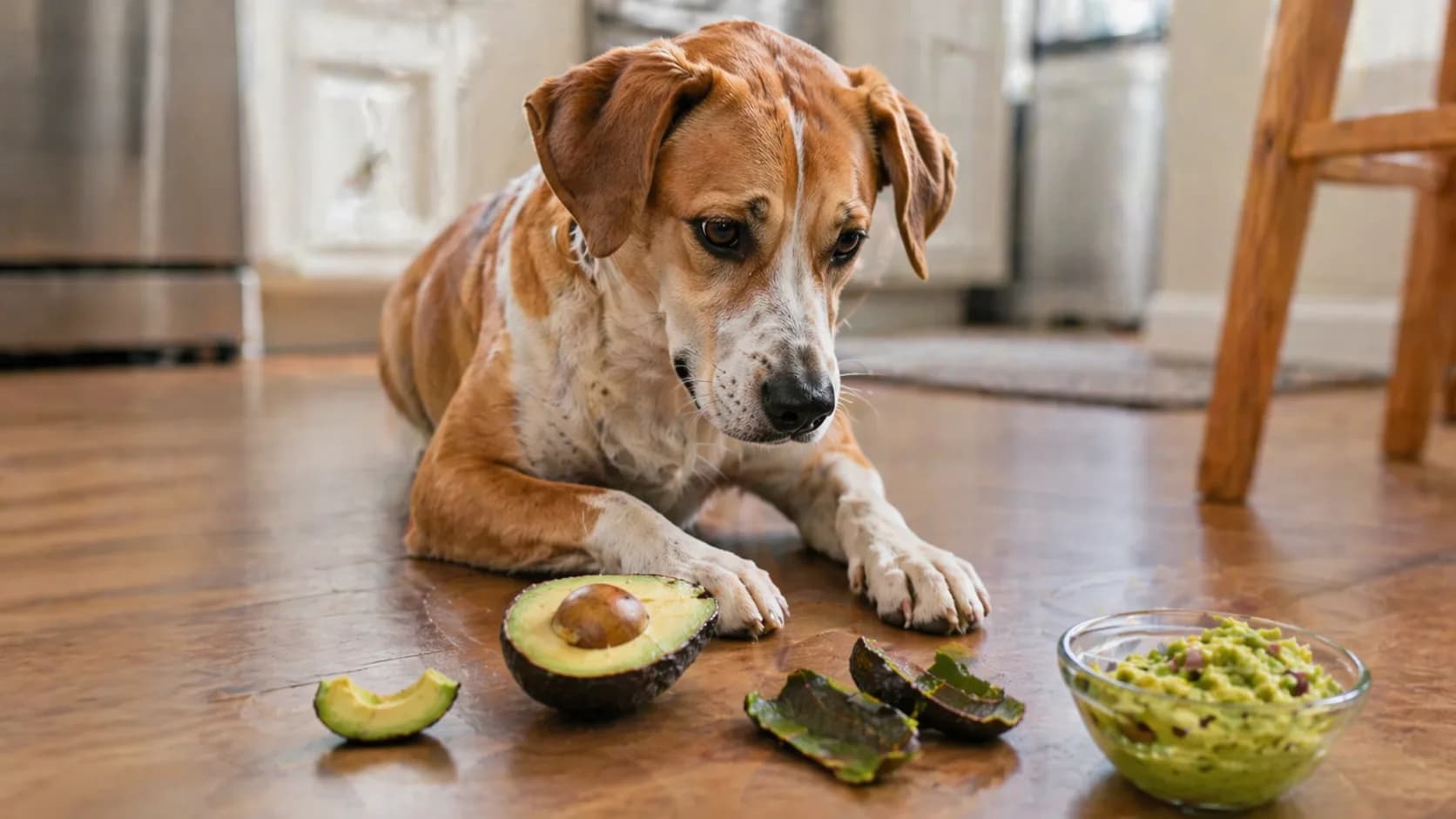
What to do right now
The part of the avocado often matters more than the amount. Before anything else, figure out what your dog actually got into.
Work through this quickly:
- Remove any remaining avocado, guacamole, pit, or skin from reach
- Identify what was eaten — flesh, pit, skin, oil, or guacamole
- Estimate how much
- Watch for vomiting, diarrhea, gagging, lethargy, or signs of abdominal pain
- Call a vet if your dog ate the pit, skin, guacamole, a large amount, or is already showing symptoms
How much did your dog eat?
Amount matters, but no published safe dose exists for dogs.
A small piece of plain ripe flesh is a fundamentally different situation from half an avocado, a whole one, the pit, or anything guacamole-adjacent.
- Small piece of flesh: Monitor at home if your dog is healthy and acting normally
- Several bites or roughly half an avocado: Call a vet — especially for small breeds or dogs with a history of pancreatitis
- A whole avocado: Call a vet; the fat load alone is a concern, and pit or skin ingestion may have occurred without being noticed
- Any pit, skin, leaves, or guacamole: Treat as higher risk and call a vet
Dog ate avocado flesh
Plain avocado flesh is the lowest-risk part of the fruit, and a small amount will often pass without incident in a healthy adult dog.
That said, the flesh is high in fat. Some dogs — particularly smaller breeds or those with sensitive stomachs — will develop vomiting, diarrhea, or general abdominal discomfort even from modest amounts.
Monitor for 24 hours. A dog that stays alert, eats normally, and shows no symptoms is unlikely to have a serious problem.
Dog ate avocado pit
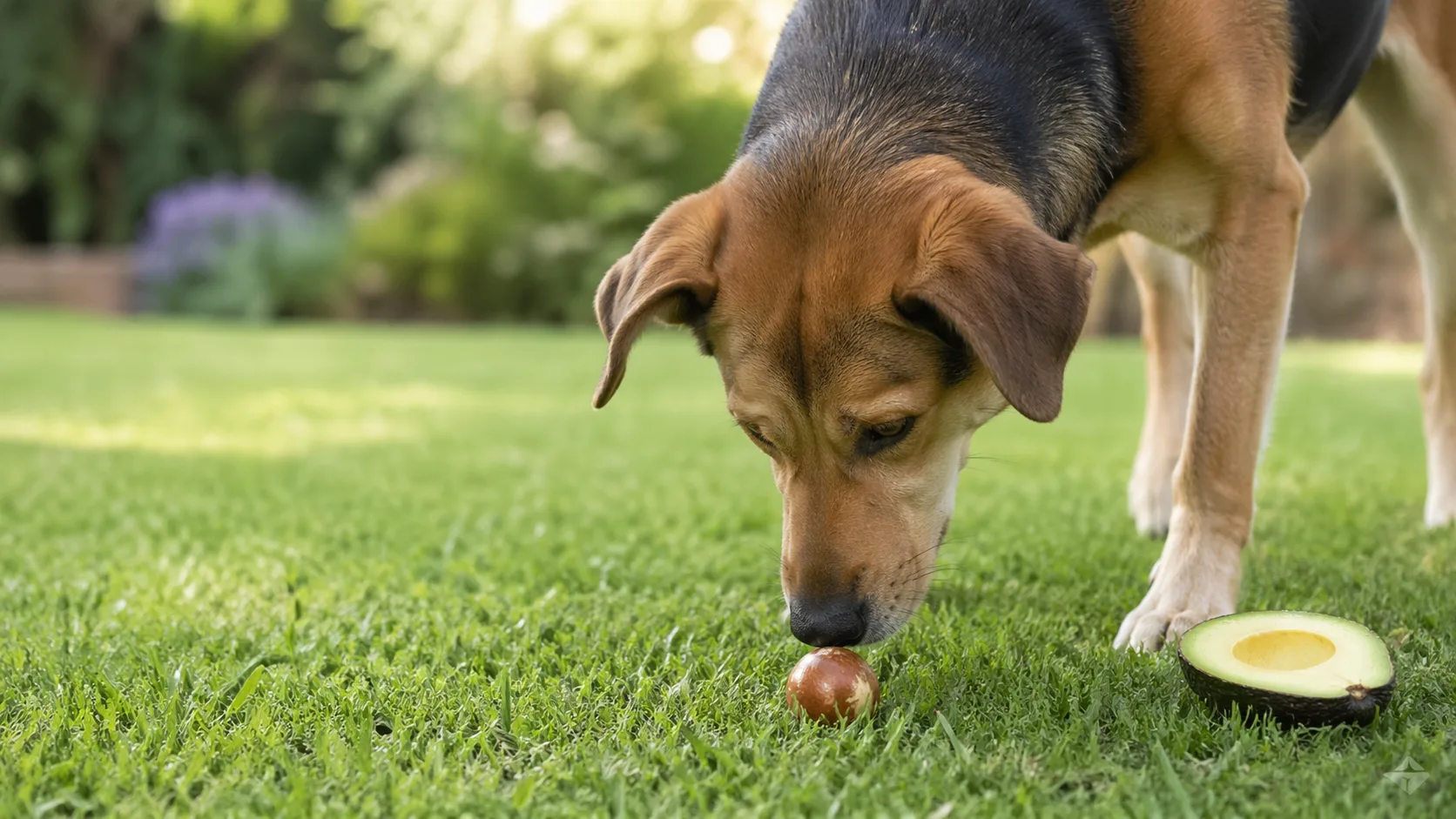
Call a vet. Do not wait to see what happens.
The pit poses two distinct risks: choking on the way down, and obstruction further along the digestive tract if swallowed. Neither is something to ignore, and early signs may not be obvious.
Signs that something is wrong include:
- Gagging or retching
- Repeated vomiting
- Refusing food
- Visible abdominal discomfort
- Lethargy
- No stool, or straining without producing any
A vet can determine through imaging whether the pit has passed safely or become lodged — and intervene before the situation becomes an emergency.
Dog ate avocado skin or peel
Avocado skin is harder to digest than the flesh and tends to irritate the stomach lining. It may also contain higher concentrations of persin — the compound found throughout the avocado plant — than the ripe flesh does.
A small piece in a dog that seems completely normal can generally be monitored at home. A larger amount, a small dog, or any emerging symptoms are all reasons to call a vet.
Dog ate guacamole
Call a vet — and the avocado is the least concerning ingredient in it.
Standard guacamole almost always contains onion and garlic, both of which are toxic to dogs. They damage red blood cells, the effects are dose-dependent, and symptoms — including anemia — can take one to three days to appear. A dog that seems fine the night it happened may not be fine two days later.
Salt, lime juice, jalapeño, and other common additions compound the risk further.
Call a vet even when your dog appears completely normal, and mention whether the guacamole contained onion or garlic.
Dog ate avocado oil
Plain avocado oil sits at the lower end of the risk spectrum. It is generally lower risk because it contains far less plant material than the skin, pit, or leaves.
The concern is still fat. A small lick is unlikely to cause harm. Larger amounts can cause vomiting, diarrhea, or pancreatitis in dogs that are prone to it.
If the oil came from a cooking pan, consider what else was in it. Garlic, onion, salt, or spices change the picture considerably.
Symptoms to watch for
Some symptoms appear within hours. Others — particularly those related to onion or garlic toxicity — take days.
Watch for:
- Vomiting
- Diarrhea
- Loss of appetite
- Lethargy
- Abdominal pain or a hunched posture
- Gagging or retching
- Restlessness
More serious warning signs are repeated vomiting, weakness, collapse, labored breathing, or any indication of a blockage following pit ingestion.
When to call a vet immediately
Call a vet or emergency clinic without delay if your dog ate:
- The pit
- A large amount of avocado
- Skin, leaves, or bark
- Guacamole
- Avocado combined with onion, garlic, salt, or spices
Also call immediately if your dog is vomiting repeatedly, appears weak or painful, is choking or gagging, or is behaving abnormally in any way.
Inducing vomiting
Do not attempt to make a dog vomit without direct veterinary instruction.
The instinct is understandable, but inducing vomiting in the wrong circumstances can cause serious harm — and if the pit was swallowed, it can turn a concerning situation into a dangerous one. If vomiting seems like it might be necessary, call a vet or emergency clinic first and let them guide the decision.
When monitoring at home is reasonable
Home monitoring is appropriate when your dog ate only a small amount of plain avocado flesh and is acting completely normal — alert, eating, drinking, and showing no signs of distress.
Watch closely for the next 24 hours. Vomiting, diarrhea, appetite changes, or unusual tiredness are all reasons to call a vet. If there is any uncertainty about what part of the avocado was eaten, a vet call is the safer choice.
Is avocado safe for dogs in general?
This page covers dogs that have already eaten avocado.
Can dogs eat avocado?