

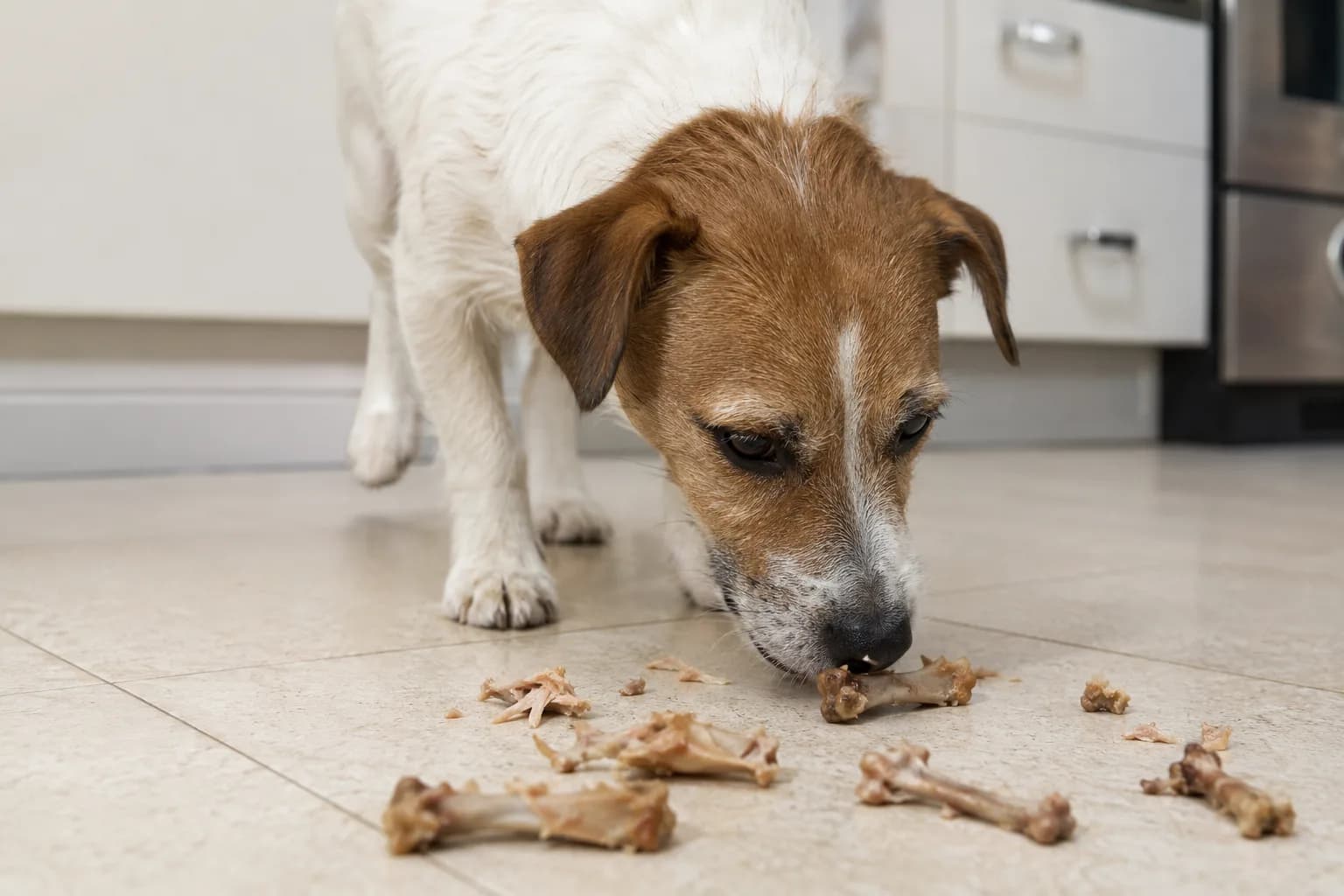
Dog Ate Chicken Bones: What to Do Right Now
Before anything else, confirm your dog is breathing normally. Choking is the most immediate risk and takes priority over everything else.
Then work through this quickly:
- Check for choking. Gagging, struggling to breathe, pawing at the mouth, collapse, or blue-tinged gums mean emergency care now — not a phone call first.
- Remove what is left. Clear the plates, the trash, any remaining bones or fragments within reach.
- Don't pull blindly. If a bone is clearly visible in the mouth and removable without force, remove it. If it is lodged or your dog resists, go to a vet.
- Figure out what was eaten. Cooked or raw? Wing bones, breast bones, rotisserie? One piece or several?
- Call your vet. Have your dog's weight, bone type, estimated amount, and timing ready before the call.
A dog that seems completely normal right now is not necessarily out of the woods. Some problems develop as bone fragments move through the digestive tract over the following hours and days.
My Dog Ate Chicken Bones But Seems Fine
Seeming fine is a starting point, not a conclusion. Dogs can eat chicken bones and show no immediate signs while a fragment quietly creates a problem further along.
Watch closely for the next several days — appetite, energy, stool consistency, any vomiting, signs of belly discomfort, and whether your dog is straining to defecate. Call your vet earlier rather than later if your dog is small, ate cooked bones, consumed multiple bones or fragments, or you do not know exactly what was swallowed.
Dog Ate Cooked Chicken Bones
Cooked chicken bones are more dangerous than raw ones. Cooking makes bone brittle — instead of bending or breaking into blunt pieces, cooked bone splinters into sharp shards that can lacerate the mouth, throat, stomach lining, or intestines.
This is not a wait-and-see situation. Call your vet if your dog ate cooked chicken bones, particularly if the dog is small, ate more than one bone, chewed them into fragments, or is already showing any symptoms.
Do not induce vomiting. Sharp bone fragments cause more damage coming back up than continuing through.
Dog Ate Rotisserie Chicken Bones
Rotisserie bones are cooked bones with the same splintering risk — plus the added concern of salt, seasoning, garlic, onion, and fatty skin that frequently come with them. Save the packaging if possible, estimate how much was eaten, and call your vet if the amount is unclear or symptoms develop.
Dog Ate Chicken Wing Bones
Wing bones are small, commonly cooked, and prone to splintering into sharp pieces when chewed. A dog that ate chicken wing bones needs close monitoring even if they seem normal immediately after.
Remove any remaining wings and check the mouth for fragments — carefully, without forcing your hand in if the dog is agitated. Watch for gagging, coughing, drooling, repeated swallowing, vomiting, belly discomfort, straining, or any blood in the stool.
Call your vet if your dog ate multiple wing bones, swallowed pieces without chewing, is small, or develops any of the above symptoms.
Small Dog Ate Chicken Bones
Size matters significantly here. A bone fragment that might pass through a 70-pound dog can obstruct, perforate, or cause serious injury in a 10-pound dog. Small dogs have narrower throats, smaller stomachs, and less tolerance for the physical trauma that sharp bone fragments can cause.
If a small dog ate cooked chicken bones, wing bones, multiple fragments, or any piece that looked sharp, call a vet. Do not take a wait-and-see approach based on how the dog appears in the first hour.
Dog Ate Chicken Bones Symptoms
Some signs appear immediately if a bone is lodged in the mouth or throat. Others develop over hours or days as fragments move through the digestive tract.
Watch for:
- Gagging or choking
- Coughing
- Drooling
- Pawing at the mouth
- Repeated swallowing
- Vomiting or unproductive retching
- Diarrhea
- Loss of appetite
- Lethargy or weakness
- Abdominal pain or hunched posture
- Bloating
- Straining to defecate or constipation
- Bloody or black stool
- Restlessness or obvious discomfort
Trouble breathing, repeated vomiting, severe belly pain, collapse, bloody stool, black stool, or inability to defecate are emergencies. Go — do not call first.
How Long Does It Take Chicken Bones to Pass?
There is no reliable timeline. Some fragments pass within a day or two. Others create problems before they pass or become lodged somewhere along the way.
Monitor stool and symptoms for several days. Do not declare the situation resolved because the dog seems fine for the first few hours — bone-related problems can develop well after the initial ingestion. Any new symptoms at any point after eating bones warrant a call to the vet.
Home Remedies After a Dog Eats Chicken Bones
Skip them. Feeding bread, rice, or pumpkin to "cushion" sharp bone fragments is a commonly repeated piece of advice with no veterinary support behind it — and it can delay appropriate care. Do not do it unless a vet specifically recommends it for your dog's situation.
Do not give hydrogen peroxide. Do not induce vomiting. Sharp bone fragments that went down without cutting can cause serious injury on the way back up.
The most useful thing to do at home is collect information: your dog's weight, bone type, whether it was cooked, estimated amount, time of ingestion, and current symptoms. That is what the vet needs.
What Vets Do After a Dog Eats Chicken Bones
Treatment depends on what was eaten, how much, and how the dog is presenting. Not every case requires intervention — many are monitored carefully at home with clear instructions. Serious cases need fast action.
A vet may recommend a physical exam, oral and throat assessment, X-rays to locate fragments or identify obstruction, medication for vomiting or stomach irritation, monitored observation, hospitalization, endoscopy, or in serious cases, surgery.
The earlier the call, the more options are available.
When to Call a Vet Immediately
Call a vet, emergency clinic, or animal poison control without delay if:
- The dog is choking, gagging, or struggling to breathe
- The bones were cooked
- The dog ate chicken wing bones
- The dog is small and ate any chicken bone
- Multiple bones or a large amount was consumed
- Bones were swallowed without chewing
- Vomiting is repeated
- Belly pain, bloating, or a hunched posture is present
- Stool is bloody or black
- The dog cannot defecate or is straining
- The dog is weak, lethargic, restless, or not acting normally
If the dog is currently asymptomatic but the bone type or amount is unclear, calling for guidance is still the right move.
How to Prevent This From Happening Again
Most chicken bone accidents happen in seconds — a plate left on the coffee table during halftime, a trash bag within reach after dinner, rotisserie chicken scraps left on the counter. The dog is faster than the owner expects every time.
- Dispose of chicken bones directly into a sealed, dog-inaccessible trash can
- Never leave plates with bones unattended at dog height
- Secure trash bags immediately after clearing the table
- Brief guests — most people will share food without thinking twice
- Offer appropriate dog chews rather than table scraps
Plain cooked chicken meat without bones is safe for most dogs. Bones are the variable that changes that entirely.
Bottom Line
Cooked bones, wing bones, rotisserie bones, multiple pieces, and small dogs eating any chicken bone all warrant a vet call. Check for choking, remove what is left, gather the relevant details, and make the call if there is any uncertainty about what was eaten or how much.
Do not induce vomiting. Do not rely on home remedies. Most dogs that eat chicken bones do not end up in surgery — but the ones that do needed faster action than they got.