

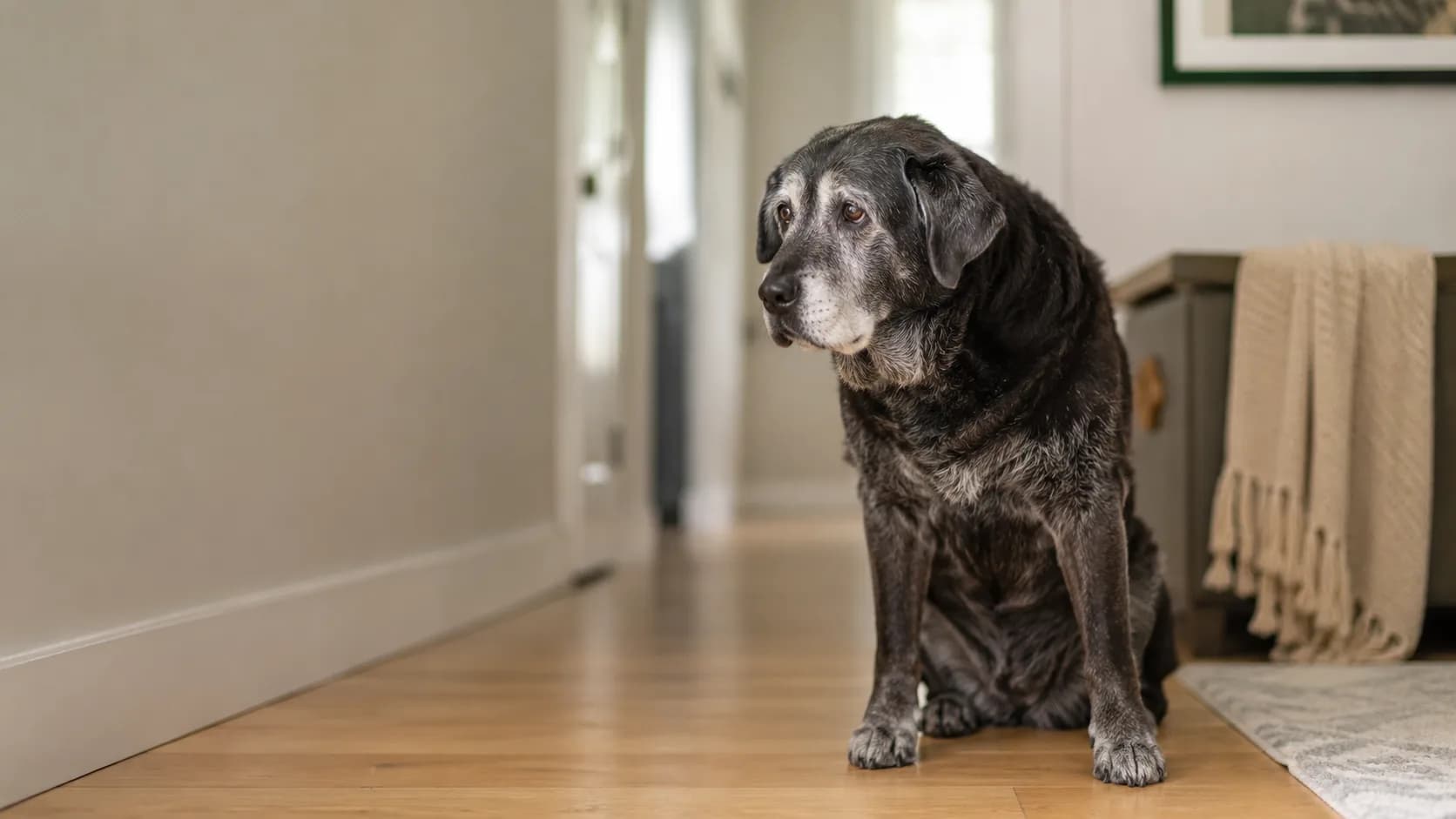
What Is Dog Dementia?
Dog dementia is the common term for cognitive decline in older dogs — the veterinary diagnosis is canine cognitive dysfunction syndrome, and it affects memory, awareness, sleep, learned behaviors, and emotional regulation.
This is not a dog becoming stubborn or difficult. Senior dogs with cognitive dysfunction are experiencing real neurological changes. They may seem confused in rooms they have lived in for years, forget routines they have followed for a decade, pace through the night, have accidents indoors, or become anxious without any obvious trigger.
The changes tend to build slowly, which is exactly why they get missed. Owners chalk it up to aging, slowing down, or becoming needy — and sometimes they are right. But sometimes the brain is changing, and earlier recognition produces better outcomes.
Can dogs get dementia or Alzheimer's?
Dogs do not receive an Alzheimer's diagnosis, but the comparison is not unreasonable — confusion, forgetfulness, disrupted sleep, anxiety, and behavioral changes that look similar to human Alzheimer's presentation are all part of the picture. The correct veterinary term is cognitive dysfunction syndrome. Researchers have found Alzheimer-like brain changes in some older dogs, but veterinarians still diagnose cognitive dysfunction syndrome based on behavior, history, and overall health rather than by labeling it Alzheimer's. If a senior dog seems lost, confused, or fundamentally different from their usual self, it deserves a vet conversation rather than a wait-and-see approach.
Dog Dementia Symptoms and Signs
Cognitive dysfunction does not announce itself cleanly. The signs usually arrive as a pattern — behavior shifts, sleep disruption, house accidents, anxiety, trouble with familiar routines — and a single symptom in isolation does not confirm the diagnosis. What matters is the accumulation of changes in a senior dog over time.
Common signs include:
- Getting stuck in corners or behind furniture
- Staring at walls, floors, or empty spaces
- Pacing, wandering, or walking aimlessly
- Acting confused in familiar rooms
- Forgetting known commands
- Not recognizing familiar people or pets as quickly
- Sleeping more during the day
- Waking, pacing, whining, or barking at night
- Having accidents indoors after being reliably house-trained
- Becoming more anxious, clingy, irritable, or withdrawn
- Showing less interest in play, walks, or normal routines
These same signs can appear with pain, arthritis, vision loss, hearing loss, urinary tract infections, kidney disease, liver disease, brain disease, anxiety, and other medical problems. That overlap is precisely why a vet visit matters — not to confirm what you already suspect, but to find out what else might be going on.
First signs of dementia in dogs
Early signs are often subtle enough to dismiss. A pause in a doorway. Staring into a corner. Waking at an odd hour. A moment of confusion in a familiar room. Slightly more anxiety than usual in the evening.
Nighttime changes are frequently the first thing owners notice — a dog who starts pacing after dark, whining when the house gets quiet, or sleeping heavily during the day and restlessly through the night. These shifts can feel like nothing at first. They rarely stay that way.
Early recognition matters because management tends to work better before cognitive decline becomes severe. If something feels off, trust that instinct and make the appointment.
Behavior changes owners often notice
The personality shifts can be as disorienting for owners as the physical signs. A dog that has always been independent may become velcro. A reliably friendly dog may become withdrawn or irritable. A calm dog may develop restlessness that has no obvious source.
Spatial confusion is one of the more striking changes — a dog walking to the wrong side of a door, getting trapped behind furniture, staring at a wall in a room they have navigated thousands of times, or barking as though lost inside their own home.
House accidents often bring owners to the vet. The dog may forget to signal, forget where the door is, or soil shortly after coming back inside. It is not defiance. The behavioral wiring that managed those routines is deteriorating.
Drinking more water, back-leg weakness, or sudden decline
Increased thirst is not a classic dementia sign — it points far more reliably toward kidney disease, diabetes, Cushing's disease, infection, or medication effects. Do not attribute it to cognitive dysfunction without ruling those out first.
Back-leg weakness is similar. Arthritis, spinal disease, nerve dysfunction, muscle loss, and pain are all common causes in senior dogs and all require their own workup. Dementia itself usually does not cause true back-leg weakness.
A sudden decline is a red flag that warrants a prompt vet call, not a cognitive dysfunction assumption. True canine cognitive dysfunction develops gradually. A dog that abruptly becomes disoriented, wobbly, unable to stand, or extremely lethargic may be having a neurological event, a cardiovascular problem, or a metabolic crisis — none of which should wait.
What Causes Dementia in Dogs?
Cognitive dysfunction is an age-related condition — the aging brain loses efficiency, accumulates abnormal protein deposits, and becomes less capable of processing information, regulating sleep, and retrieving learned behaviors. There is rarely one clean cause.
Overall health, pain, anxiety, sensory loss, sleep disruption, and concurrent medical conditions all influence how severe the signs become and how quickly they progress. A dog in chronic pain who also has cognitive decline will often appear more confused and distressed than the cognitive dysfunction alone would predict. These factors do not cause dementia, but they amplify it.
How Do I Know If My Dog Has Dementia?
You cannot confirm it from symptoms alone, and neither can your vet without a proper workup. What you can do is document what you are seeing — when it happens, how often, what triggers it, whether it is getting worse — and bring that to the vet along with any changes in appetite, water intake, bathroom habits, mobility, or apparent pain level.
A detailed symptom history is genuinely useful. It helps the vet distinguish cognitive dysfunction from the long list of other conditions that can produce similar signs in a senior dog.
Does my dog have dementia quiz?
A quiz can help organize observations but cannot diagnose anything. Use it as a starting checklist, not a conclusion.
Ask yourself:
- Does my dog get lost or stuck in familiar places?
- Does my dog pace, wander, or seem restless at night?
- Has my dog started having accidents indoors?
- Does my dog stare at walls, floors, or empty spaces?
- Does my dog seem anxious, clingy, irritable, or withdrawn?
- Has my dog forgotten commands or routines they used to know?
- Does my dog sleep more during the day and stay awake at night?
- Does my dog interact differently with people or other pets?
Multiple yes answers in a senior dog are a reason to schedule a vet visit — not to confirm dementia, but to rule out pain, infection, organ disease, vision loss, and other conditions that are often treatable and can look identical.
How vets diagnose dog dementia
There is no single definitive test. Veterinarians diagnose cognitive dysfunction by evaluating behavior history, age, physical exam findings, and by systematically ruling out other medical explanations.
Blood work, urine testing, neurological assessment, pain evaluation, and sensory checks are all part of building that picture. The process matters because the signs of dementia overlap significantly with arthritis pain, urinary disease, vision loss, hypothyroidism, hypertension, and brain conditions — some of which are very treatable. Getting the diagnosis right changes the treatment plan entirely.
Dog Dementia Stages and Prognosis
Cognitive dysfunction is progressive. Signs typically start mild and become more apparent over months to years, though the pace varies considerably between individual dogs.
Early stages involve occasional confusion, subtle sleep changes, and mild anxiety. Moderate stages bring more frequent pacing, regular house accidents, consistent nighttime restlessness, and getting lost in familiar spaces. Late stages can include severe disorientation, major sleep disruption, significant distress, and a meaningful reduction in quality of life.
Dogs do not follow a textbook progression. Some remain manageable for a long time. Others decline faster, particularly when pain, mobility problems, organ disease, or anxiety compound the cognitive changes.
How long can a dog live with dementia?
Months to years after signs begin, depending on age, overall health, severity of cognitive changes, sleep quality, appetite, mobility, and comfort. Early diagnosis with consistent management generally extends the period of good quality life.
The more useful question is usually not how long, but how well — whether the dog is still comfortable, safe, and finding moments of enjoyment in daily life. That is the metric worth tracking with your vet over time.
Final stages of dog dementia
Late-stage cognitive dysfunction can look like near-constant confusion, severe anxiety, repetitive pacing, inability to settle, frequent house accidents, disrupted sleep, and reduced responsiveness to family. Some dogs vocalize through the night. Some no longer respond to comfort the way they once did. Some seem lost even in the arms of someone they have known for years.
This stage is not only about cognition. Pain, mobility, appetite, hydration, and other concurrent diseases all feed into the picture, and those factors need veterinary assessment — not guesswork at home.
Dog Dementia Treatment and Medication
There is no cure. The goal of treatment is to slow progression, reduce anxiety, improve sleep, keep the dog safe, and protect quality of life for as long as possible.
Effective management usually combines several approaches simultaneously: routine changes, environmental modifications, enrichment, dietary support, supplements, medication where appropriate, and active treatment of any other medical conditions making symptoms worse. A dog pacing at night because of cognitive dysfunction needs a different plan than a dog pacing because of unmanaged arthritis pain — or both.
Selegiline and Anipryl for dog dementia
Selegiline — brand name Anipryl — is the primary medication approved for canine cognitive dysfunction in the United States. It is not appropriate for every dog and should not be started without veterinary direction.
Drug interactions are a real concern in senior dogs already on multiple medications, and not every cognitive dysfunction presentation responds the same way. If your vet prescribes it, ask what improvement looks like in your dog specifically, how long before response can be evaluated, what side effects to watch for, and when to follow up. If nighttime restlessness is a major part of the picture, your vet may also consider other medications to help with anxiety or sleep as part of the overall plan rather than relying on environmental changes alone.
Supplements for dogs with dementia
Some supplements may support a dementia management plan when combined with diet, enrichment, exercise, and routine. Omega-3 fatty acids, antioxidants, SAMe, and medium-chain triglycerides come up frequently in these conversations. None of them are cures, and supplement quality varies enormously.
Ask your vet before starting anything — particularly if the dog takes medication, has liver or kidney disease, has seizures, or is already on a prescription diet. Supplement interactions are underestimated and worth checking.
Food and diet for dogs with dementia
Nutrition can be a meaningful part of a cognitive dysfunction care plan. Some veterinary diets are formulated to support aging brain function through antioxidants, fatty acids, and medium-chain triglycerides — not as a standalone fix, but as one component of a broader approach.
Generic "senior food" is not the same as a therapeutic diet designed for cognitive support. And if the dog also has kidney disease, pancreatitis, diabetes, obesity, or food allergies, dietary changes need veterinary input before anything is switched.
How To Calm a Dog With Dementia at Night
Nighttime is often where dementia is hardest to manage — for the dog and for everyone in the household. A dog that paces, pants, whines, gets stuck, or cannot settle after dark is exhausting to live with and distressing to watch.
Start with the environment. Night lights in hallways and sleeping areas. Stairs blocked. Pathways clear. A comfortable, easy-to-find sleeping spot that does not have corners to get trapped in. These are small changes that reduce nighttime confusion before it escalates.
A consistent evening routine helps many dogs — a calm walk, a bathroom break, quiet time, a predictable bedtime setup. Avoid rearranging furniture or making household changes late in the day when the dog's confusion is already at its peak.
Call your vet if nighttime restlessness is new, worsening, or not responding to environmental management. Pain, urinary problems, anxiety, medication effects, and other medical conditions are all common contributors that may be directly addressable.
Why dog dementia can seem worse at night
Sleep-wake cycles are one of the first things cognitive dysfunction disrupts. A dog that sleeps heavily during the day may have nothing left for the night, and the resulting restlessness can look like acute distress in a dog that seemed fine at noon.
Darkness compounds confusion — particularly in dogs with concurrent vision loss, who may navigate well in familiar light and become genuinely disoriented in dim rooms. A quiet house can also feel unfamiliar. The absence of activity, sound, and human movement removes the environmental cues some dogs rely on to orient themselves.
Persistent nightly pacing is not something to simply endure. Sleep disruption affects the dog's welfare and the household's ability to sustain long-term care. It is worth a direct conversation with your vet about what can be done.
Dog Dementia Care and Daily Management
There is no single intervention that fixes cognitive dysfunction. Good dementia care is an accumulation of small, consistent changes that make the dog's environment safer, calmer, and more predictable.
- Keep a consistent daily routine
- Use night lights in halls and sleeping areas
- Block stairs and unsafe areas
- Keep furniture layout consistent
- Use rugs or mats for traction on slippery floors
- Increase bathroom break frequency
- Use simple, calm cues — never punishment for accidents
- Provide gentle enrichment: short walks, sniff games, low-demand interaction
- Keep food, water, and beds easy to locate
- Track symptoms over time so your vet can see trends
A dog with cognitive dysfunction is not being difficult. They may be genuinely confused about where they are, who is in the room, or what the normal sequence of their day looks like. Calm, patient handling is not just kindness — it is part of the treatment.
Dog Dementia, Quality of Life, and When To Say Goodbye
The search "dog dementia when to put down" is one of the most painful things an owner can type. It usually means the dog is struggling, the household is depleted, and the owner is terrified of getting the timing wrong in either direction.
This decision belongs in a veterinary conversation, not a checklist. Dementia affects quality of life — but so do pain, mobility loss, appetite changes, sleep disruption, anxiety, incontinence, and whatever other diseases are present alongside the cognitive decline. All of it matters.
It may be time for a serious quality-of-life conversation with your vet if the dog:
- Seems distressed or disoriented most of the time
- Cannot settle or sleep despite management
- Has frequent accidents and cannot stay clean or comfortable
- Gets stuck, panics, or injures themselves repeatedly
- No longer responds to food, touch, walks, or family
- Has significant pain or mobility problems alongside dementia
- Has more bad days than good days
Choosing euthanasia for a dog in the late stages of dementia is not failure. It is the prevention of prolonged fear, confusion, and distress when quality of life can no longer be protected by any other means. If you are unsure where your dog is in that picture, ask your vet for a quality-of-life appointment. You do not need to work this out alone.
Bottom Line
Canine cognitive dysfunction is a real, progressive, age-related condition. It affects memory, sleep, behavior, house-training, anxiety, and the ability to navigate familiar environments. The signs build gradually, which is why they are easy to dismiss early and harder to manage once they are advanced.
If a senior dog is pacing at night, getting confused, having accidents, staring, acting anxious, or forgetting routines, that pattern deserves a vet visit — not to confirm dementia, but to find out what is causing it and whether anything is treatable. There is no cure, but there is a meaningful difference between a dog with managed cognitive dysfunction and one whose decline went unaddressed. Early action produces better outcomes. That part is worth acting on.